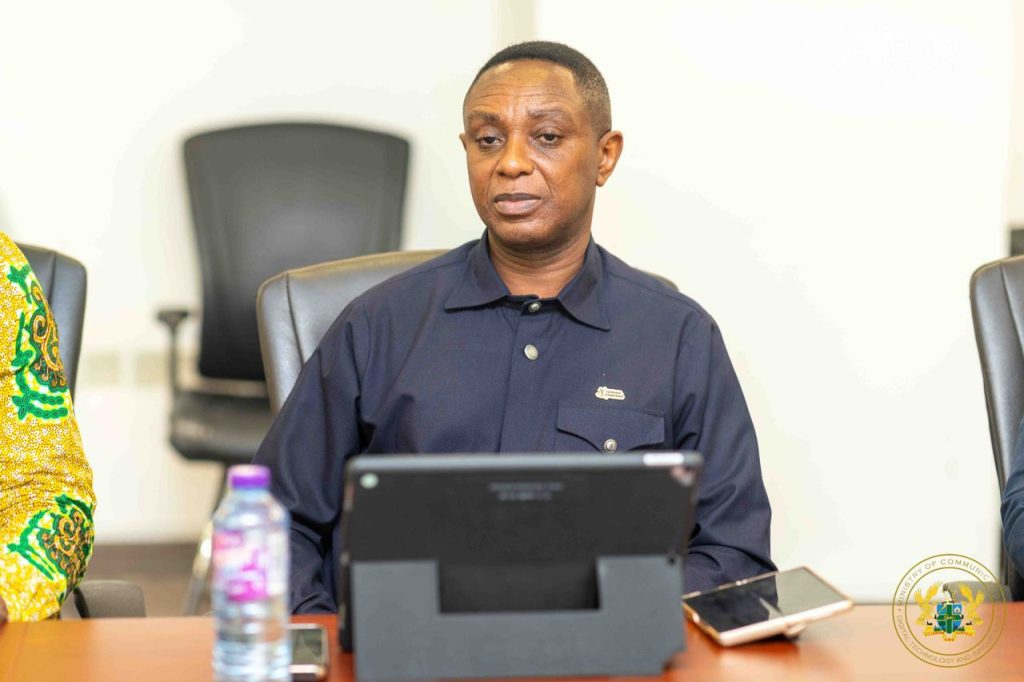
Ghana is taking significant strides in ensuring the responsible development and deployment of Artificial Intelligence (AI) technologies, with a focus on ethics, inclusivity, and transparency. The Ministry of Communication, Digital Technology and Innovations, in collaboration with UNESCO and funded by the EU, has commenced a series of stakeholder consultation on AI Readiness Assessment Methodology (RAM) which will bring together government officials, academia, ecosystem players, development partners, and experts to discuss Ghana’s AI readiness.
The first stakeholder event, held on March 5, 2026, for Ministries, Department and Agencies (MDAs) aimed to gather insights on Ghana’s current AI governance framework, identifying challenges and proposing recommendations for strengthening the country’s AI readiness. Director of Innovations, Mr Emmanuel Ofori, emphasized the importance of government institutions in AI governance, highlighting the need for responsible, transparent, and inclusive AI adoption. “Government institutions sit at the center of AI governance, and it’s crucial we get it right,” Mr. Ofori said. The consultation is part of Ghana’s implementation of the UNESCO Readiness Assessment Methodology (RAM), a global framework for assessing AI readiness.
UNESCO Representative, Mr. Carl Ampah on behalf of Mr. Edmond Moukala, stressed the need for Ghana to prioritize ethics in AI development and deployment. “AI must serve humanity, regardless of race, gender, or socioeconomic status,” -Mr. Ampah said. He highlighted Ghana’s participation in UNESCO’s RAM, aimed at evaluating the country’s preparedness to implement AI ethically and responsibly. Mr. Ampah noted that AI has vast potential but also poses significant risks if not managed responsibly, including deepening inequalities and underminishing trust.
The outcomes of the consultation will inform Ghana’s National AI Strategy, focusing on building capacity, promoting ethical AI use, and driving research and innovation. Ghana aims to become a leader in AI on the continent, leveraging AI for economic growth and national development.
Professor Jerry John Kponyo, Director of the KNUST Office of Grants and Research, presented an insightful overview of the Artificial Intelligence Readiness Assessment Methodology (RAM) report. He highlighted the importance of Ghana’s participation in the UNESCO RAM initiative, emphasizing the need for a comprehensive assessment of the country’s AI readiness. Prof. Kponyo outlined the key areas of focus, including policy and regulatory frameworks, infrastructure, human capacity, and data governance, providing a thorough analysis of Ghana’s strengths and weaknesses in AI adoption.
He stressed the significance of stakeholder engagement in shaping Ghana’s AI strategy, emphasizing the need for collaboration between government, academia, industry, and civil society. Prof. Kponyo’s presentation underscored the importance of developing a robust AI ecosystem that prioritizes ethics, inclusivity, and innovation, ultimately driving Ghana’s digital transformation and economic growth.