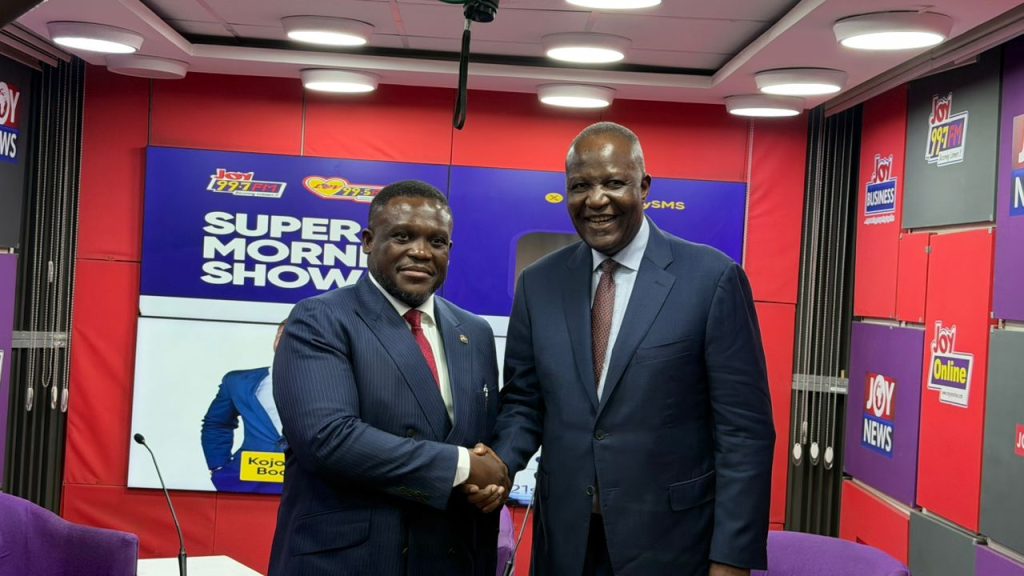
The Minister for Communication, Digital Technology and Innovations, Hon. Samuel Nartey George (MP), and Zambia’s Minister of Technology and Science, Felix C. Mutati, have reaffirmed their commitment to strengthening bilateral cooperation in fintech, cybersecurity, and digital infrastructure.
Speaking during a radio interview on Joy FM in Accra, the two Ministers highlighted ongoing high-level engagements, including Hon. Mutati’s official visit with a delegation of 16 Zambian fintech companies aimed at fostering partnerships and expanding business linkages.
Central to the discussions was the proposed mutual recognition of fintech licences between the Bank of Ghana and the Bank of Zambia, a move expected to facilitate seamless cross-border transactions without reliance on foreign correspondent banks.
The Ministers also explored collaboration in cybersecurity, e-commerce, digital identity systems, and fibre optic infrastructure to support innovation and enhance transaction security. Plans are underway to formalise aspects of this cooperation through Memoranda of Understanding, particularly in digital ID systems.
Hon. Samuel Nartey George reiterated Ghana’s commitment to inclusive digital development, stressing the importance of continental collaboration in advancing Africa’s digital transformation agenda.
“Our vision is clear, Africa must collaborate to build its digital future. We cannot afford to work in isolation, especially in areas such as artificial intelligence, data governance, and cybersecurity,” he stated.
Hon. Mutati, on his part, underscored Zambia’s interest in leveraging Ghana’s expertise in digital transformation, health technology, agriculture, and gold production and exports.
He noted that Zambia stands ready to share its own experiences in the mining and energy sectors, particularly in reducing losses and increasing copper production through policy and operational reforms.
He further highlighted the role of artificial intelligence in driving innovation, citing a local startup’s use of AI to identify one of Zambia’s largest copper deposits in recent history, an example of the transformative potential of homegrown technological solutions.
The Ministerial engagements also featured business-to-business interactions, with private sector actors from both countries exploring opportunities in fintech, health technology, and digital services.