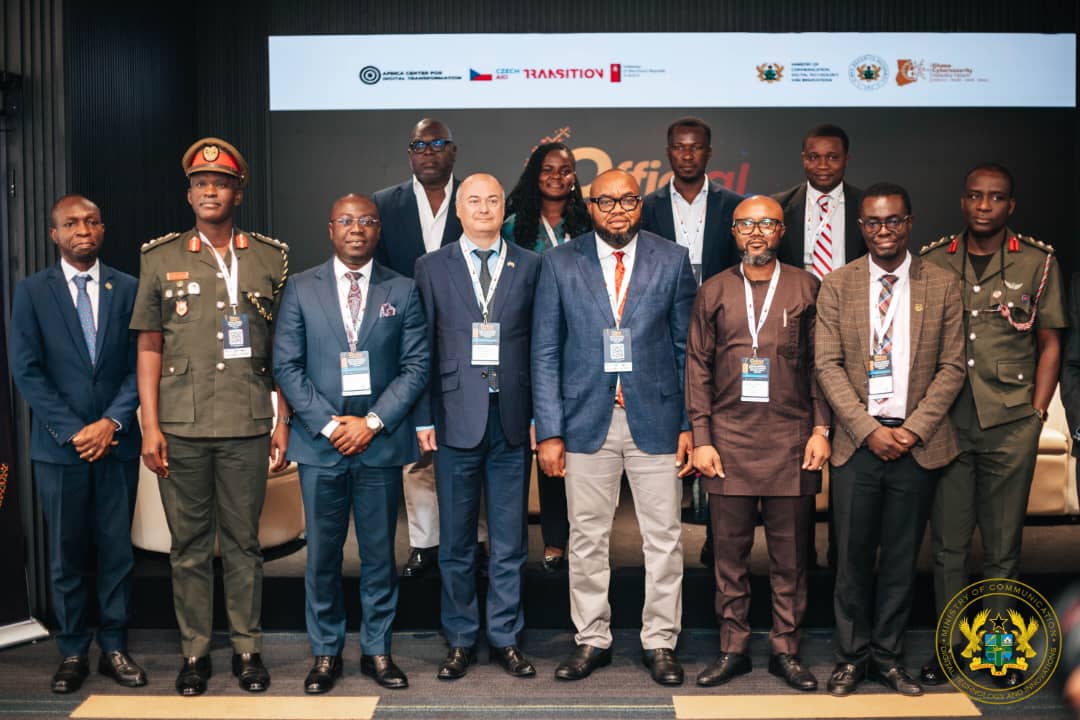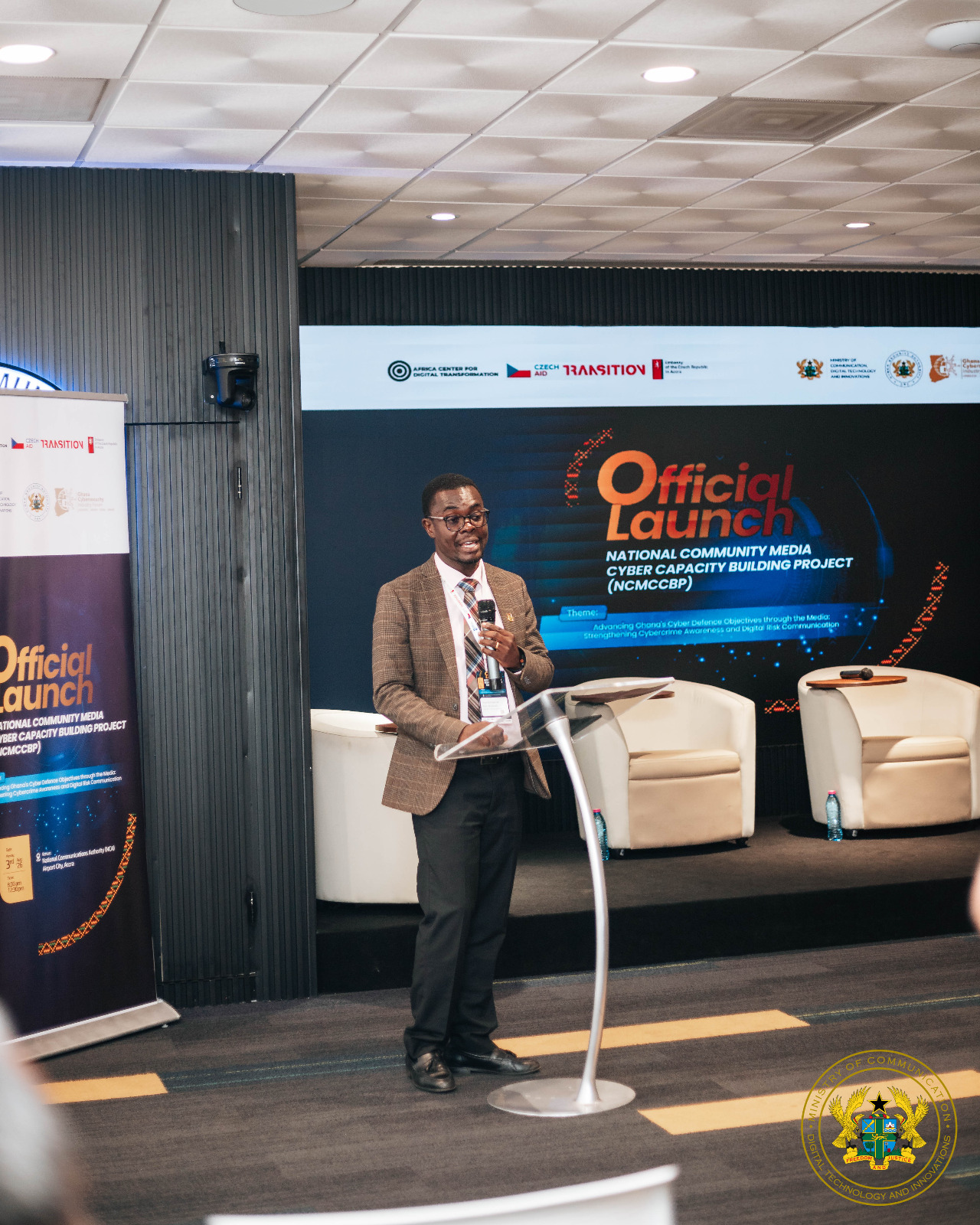
The Deputy Minister for Communication, Digital Technology and Innovations, Hon. Mohammed Adam Sukparu, (MP), has launched the National Community Media Cyber Capacity Building Project (NCMCCBP) on behalf of the Sector Minister, Hon. Samuel Nartey George, MP, with a call for stronger collaboration to build a secure, resilient and inclusive digital Ghana.
The project, launched on Monday, August 3, 2026, at the NCA Towers in Accra, seeks to equip community media practitioners with the knowledge and practical skills to educate the public on cyber hygiene, online safety, digital fraud prevention and responsible online behaviour. The initiative brings together government institutions, security agencies, development partners, media practitioners and civil society to strengthen Ghana’s cyber resilience through collaboration, knowledge sharing and public awareness.
Speaking on behalf of the Sector Minister, the Deputy Minister said cybersecurity was central to Ghana’s digital transformation agenda, stressing that the growth of digital technologies must be accompanied by trust, security and resilience.
Hon. Sukparu noted that cybersecurity had become not only a technological concern but also an economic, governance, national security and development imperative.
He said the growing threats of mobile money fraud, identity theft, online impersonation, misinformation, cyber-enabled crime and child online protection challenges required greater public awareness and stronger collaboration between government, the media, security agencies and local communities. He further underscored the strategic role of community media, particularly community radio, in reaching rural and underserved communities in local languages.
The Deputy Minister urged journalists to make cybersecurity reporting a public service, noting that accurate reporting and sustained public education could help prevent cybercrime and strengthen national resilience
According to him, government would continue to pursue a whole-of-government and whole-of-society approach involving Ministries, Departments and Agencies, the Cyber Security Authority, law enforcement institutions, academia, the private sector, civil society, development partners, technology companies and the media.
Cybersecurity Requires Collaboration
The Director-General of the Cyber Security Authority (CSA), Mr. Divine Selase Agbeti, said the growing sophistication of cybercrime made collaboration among government, law enforcement, the media and other stakeholders essential to protecting Ghana’s cyberspace.
Mr. Agbeti noted that cybercrime was no longer a distant or purely technical problem, citing threats including mobile money fraud, online investment scams, romance fraud, identity theft, extortion, business email compromise and impersonation.
He said many of these crimes were being perpetrated by organised criminal networks operating across borders.
Mr. Agbeti said the CSA, in collaboration with the Ghana Police Service, national security institutions and international partners, had intensified operations against criminal networks, with arrests and prosecutions demonstrating the organised nature of cybercrime.
He described the media as a critical partner in the fight against cybercrime, stressing the need for media practitioners to understand cybersecurity issues and communicate them accurately and responsibly.
According to him, the initiative would create a national network of media professionals who could translate technical cybersecurity information into practical advice for ordinary Ghanaians.
“Our vision is simple: every Ghanaian should have the knowledge to stay safe,” he said, urging participants to use the training to build their expertise and help protect citizens from becoming victims of cybercrime.
Czech Republic Reaffirms Support
The Ambassador of the Czech Republic to Ghana, His Excellency Pavel Bílek, reaffirmed his country’s commitment to strengthening Ghana’s cybersecurity capacity, describing Ghana as a priority partner in Africa in the area of cybersecurity.
He said the cooperation between Ghana and the Czech Republic had developed over several years, with support covering professional exchanges, training, technical assistance and the provision of specialised cybersecurity equipment.
The support, according to him was aimed at strengthening the capacity of Ghanaian investigators to extract, process and analyse digital evidence and support stronger evidence for court proceedings.
He stressed that effective cybersecurity capacity building required more than technology, describing it as a combination of expertise, tools, training and long-term partnerships.
The Ambassador also welcomed the National Community Media Cyber Capacity Building Project, describing it as an important initiative that connects cybersecurity, media development and responsible public communication.
He said fighting cybercrime could not be left to law enforcement agencies alone, stressing that citizens must be equipped to recognise digital risks, while journalist report cyber-related issues accurately and responsibly.