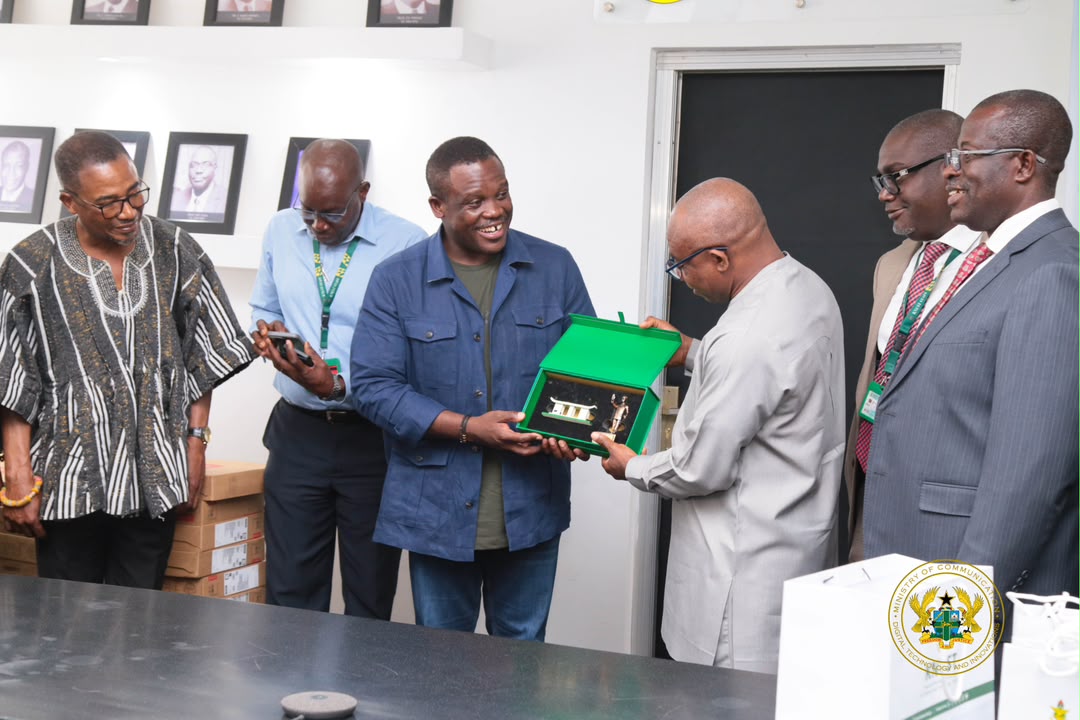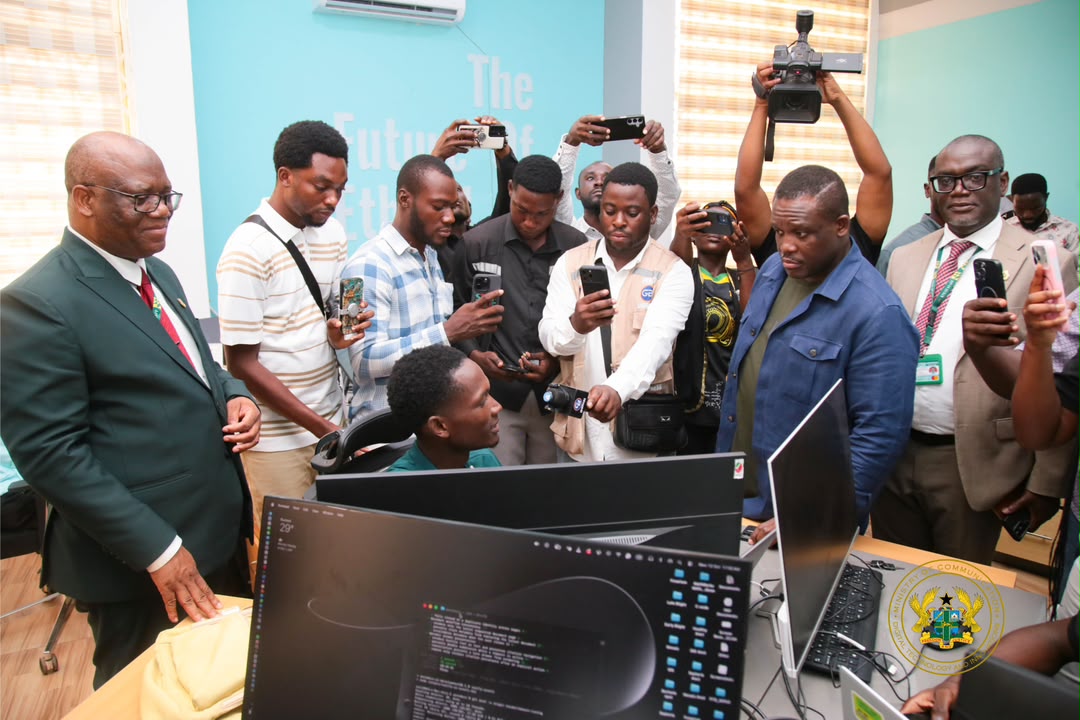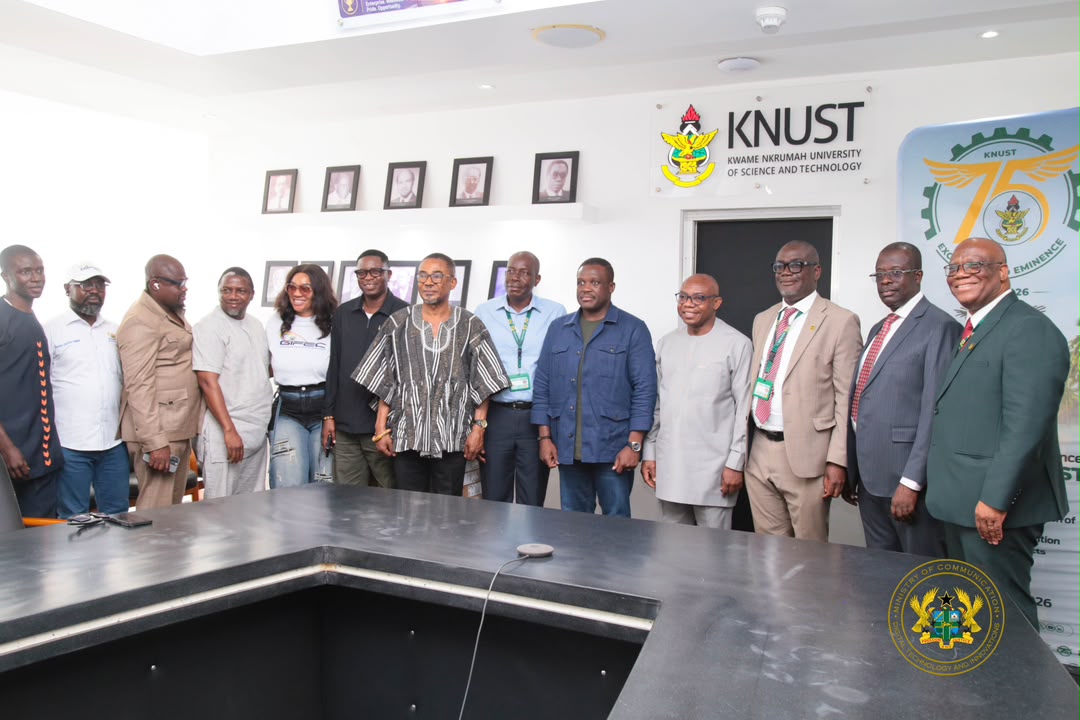
During his Ashanti Regional tour inspecting digital and telephony projects, the Minister for Communication, Digital Technology and Innovations stopped by the KNUST campus to tour the photonics and optics lab alongside Prof. Kwabena Biritwum Nyarko, Provost of the College of Engineering.
Guided by Dr. Akyana Britwum, the Principal Investigator and Scientific Lead of the lab, the delegation explored groundbreaking local innovations designed to future-proof science education and national security. Highlights included a low-cost Quantum Key Distribution setup for encryption training and drastically cheaper spectrometers built locally to democratize environmental and health monitoring.
The visit also showcased the international partnerships powering the laboratory’s rise, chief among them the University of St Andrews in Scotland. Through their joint UK-funded BOSOMTWE project, St Andrews has been central to capacity building at the lab in microscopy and spectroscopy, training GPOL scientists and placing cutting-edge tools in Ghanaian hands. The delegation saw the lab’s through-barrier Raman spectrometer, an instrument built at St Andrews by Dr. George Dwapanyin and Dr. Graham Bruce that identifies medicines and other substances through sealed packaging without opening them, now permanently installed at KNUST in the fight against counterfeit drugs.
Discussions quickly pivoted from lab research to real-world industrial impact and job creation for young graduates. Emphasizing the need to scale local solutions across the sub-region through strategic institutional partnerships, Prof. Nyarko and the Minister underscored a shared commitment to building home-grown technological ecosystems.
“We must not just experiment here and learn how to build the systems and train our people, but we must begin to look at how this knowledge becomes beneficial to not just Ghana, but the sub-region… We’re future-proofing the training of the scientists and technology-based professionals from here.”
The Minister added on the importance of persistence in innovation:
“We shouldn’t be afraid to fail, because the countries where today we order everything from… failed for decades. But because they were consistent and persistent with failure, they learnt how not to fail.”
By bridging the gap between academic research, regulatory bodies like the Ghana Standards Authority and FDA, and patient capital financing, the Ministry and its academic partners are laying the groundwork for a robust innovation ecosystem