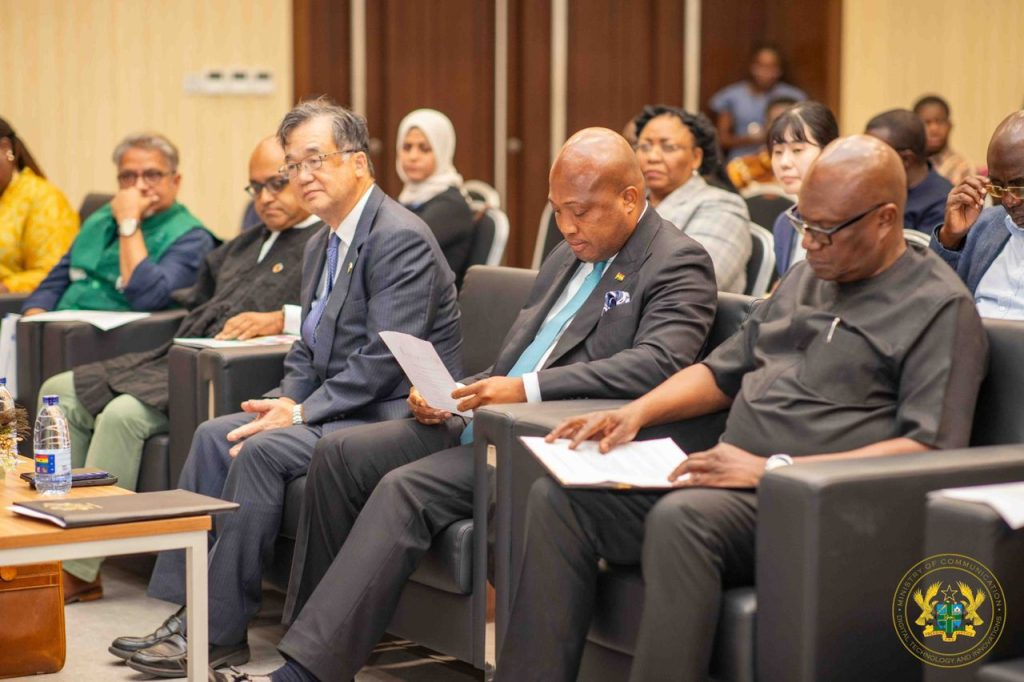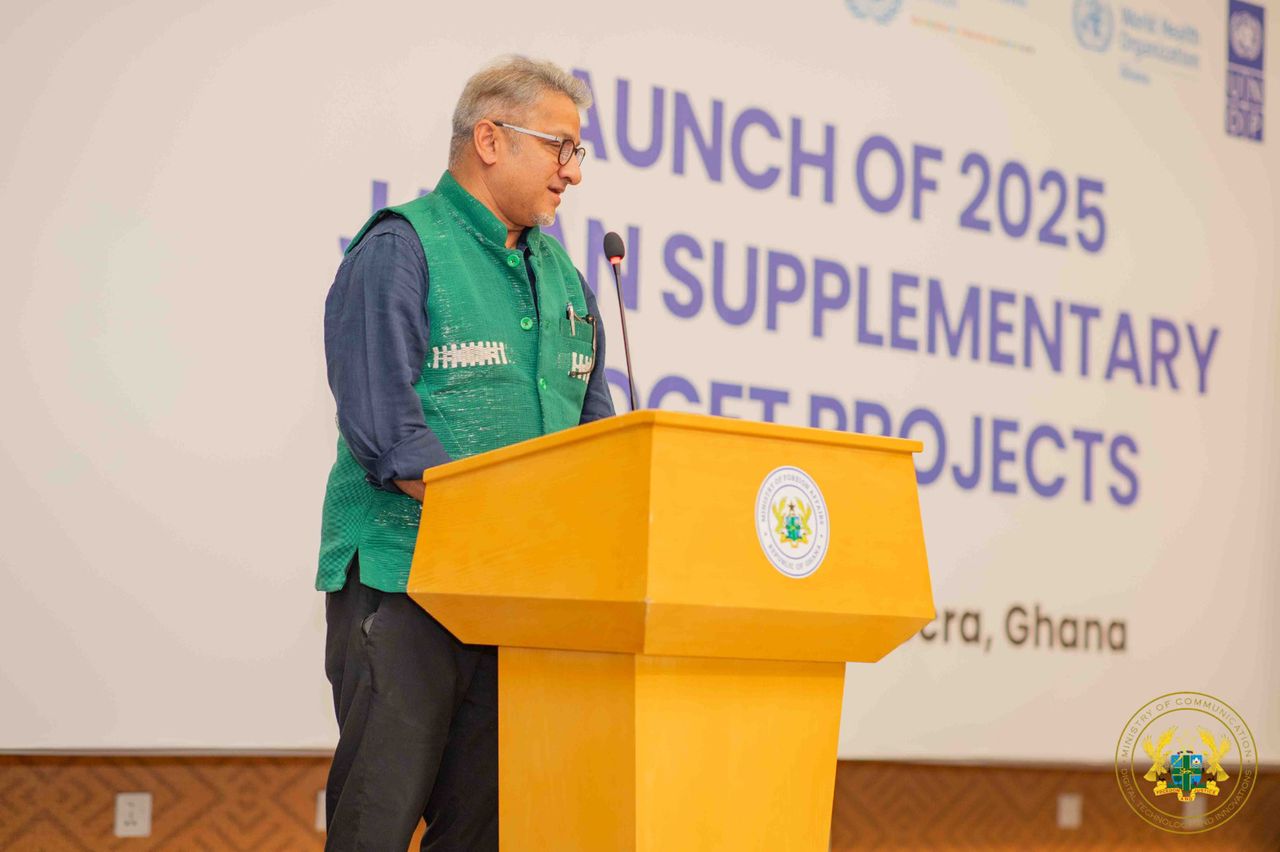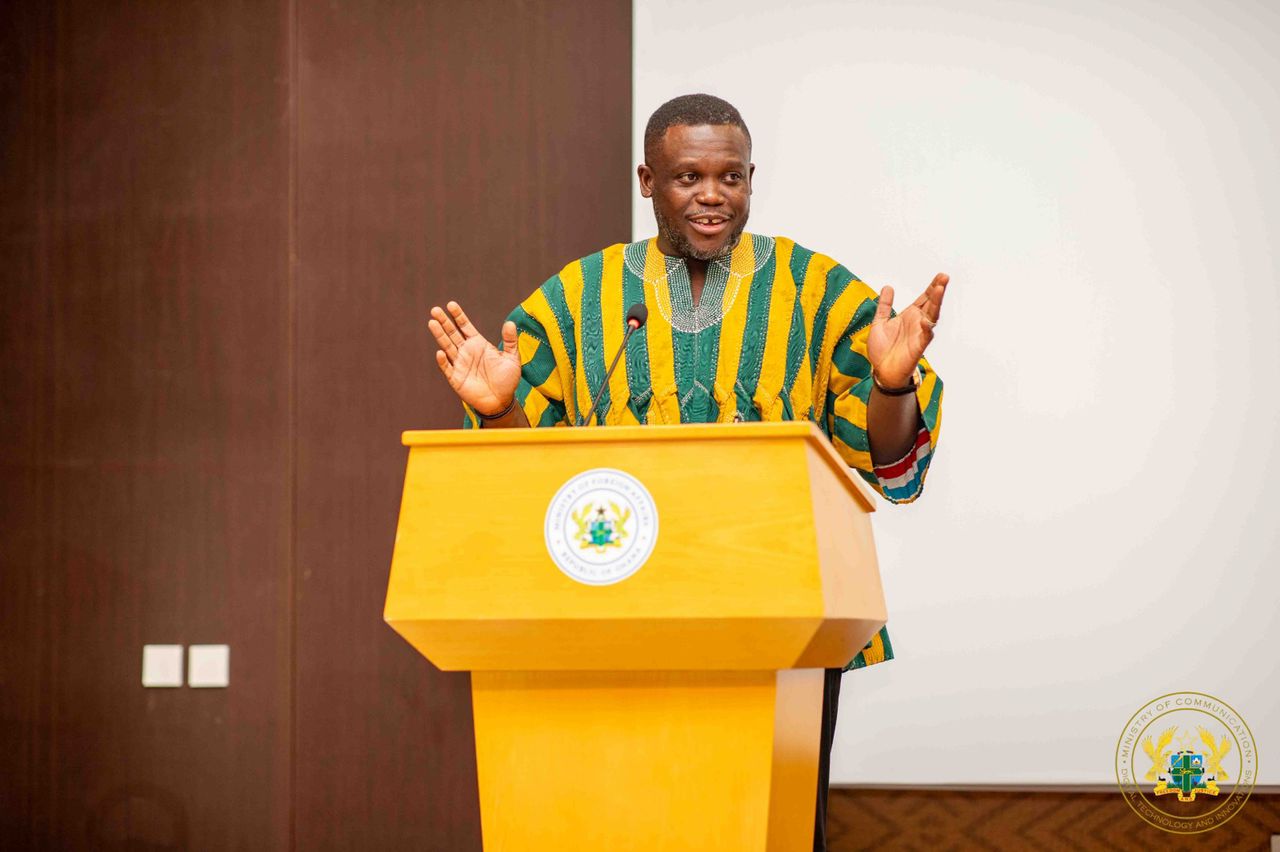
The Minister for Communications, Digital Technology and Innovations, Hon. Samuel Nartey George (MP)), on Wednesday launched a major initiative to accelerate artificial intelligence adoption across Ghana’s public service, positioning the programme as a strategic investment in government leadership rather than a routine training exercise.
Speaking at the event, in Accra, he said the “Accelerating Public Sector Digital Transformation through Capacity Building” initiative , delivered in partnership with the United Nations Development Programme (UNDP) and the Government of Japan, would move Ghana’s public sector from AI awareness to the systematic institutionalisation of knowledge and practical application.
”AI is no longer a distant concept, and it must not become the preserve of only the world’s most advanced economies. AI is already reshaping how our government operates, how our economy grows, and how Ghanaians engage with public services,” the Minister stated.
According to him, the launch comes as Ghana prepares for the formal unveiling of its National AI Strategy by President John Mahama on 24 April, following Cabinet approval of the document, thereby describing the two events, as closely linked, with the capacity-building programme directly aligned with the priorities set out in the Strategy.
Hon. Samuel Nartey George mentioned that the new initiative builds on an AI Ministerial Bootcamp co-hosted by the Ministry and UNDP in July last year, which engaged approximately 100 senior government officials — including fellow Ministers — in sessions covering AI fundamentals, risks, opportunities, and practical use cases for public service delivery.
He added that, under the expanded programme, targeted training will be led by the UNDP Digital and AI Hub, supplemented by knowledge exchange with Japanese experts and technical advisory support.
The Minister said the training would equip officials across Ministries, Departments and Agencies to better understand AI and digital transformation; identify practical service delivery use cases; strengthen governance, safeguards and risk management; and align sectoral priorities with the national AI strategy.
A central feature of the programme, he said, was the development of a cadre of local trainers and experts to ensure that knowledge is not merely transferred but sustained and scaled across government over time.
The Minister identified the shortage of digital and AI skills within the public sector as a major barrier to fully harnessing the developmental potential of artificial intelligence. He also referenced projections indicating that AI could contribute over USD 19.9 trillion to the global economy by 2030.
”By adopting this systemic approach, we unlock compounded benefits: evidence-informed policymaking, stronger foundations for digital public infrastructure, new pathways for innovation and social mobility, and greater confidence for private sector investment.This programme is not just a training initiative. It is a strategic investment in leadership, in coherence across government, and in Ghana’s ability to pave the way in this digital world,” the Minister said.