Renewing a birth certificate, paying your national insurance contributions or finding the right government information should not mean long queues, repeated forms or confusion over where to go.
That is the ambition behind the planned revamp of Ghana.gov, as work gathers pace to redesign the platform into a simpler, more joined-up and citizen-centred ‘one-stop-shop’ to government services, led by MoCDTI’s Ghana Digital Acceleration Project (GDAP).
At the heart of the revamp is a shift away from simply putting existing government processes online, towards redesigning services around the real needs of citizens and businesses. Edwin Amaoko, the GDAP Project Coordinator remarked that “this is not just about upgrading a website. This is a priority project to make government easier to access and faster to navigate for citizens, whilst providing a critical revenue generating enabler for Ghana.’
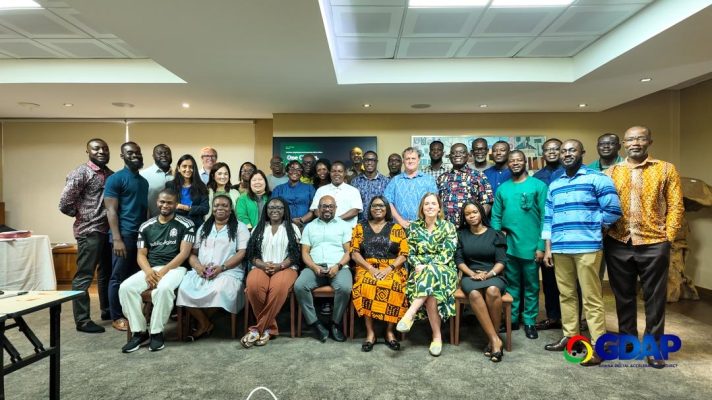
A three-day working session hosted this week by the World Bank, with support from the Tony Blair Institute and Public Digital, brought together key stakeholders from GDAP, NITA and several MDAs to align around the vision and agree practical next steps.
The Ghana.gov revamp is expected to play a central role in Ghana’s wider digital transformation agenda by helping people and businesses access public services through a simpler, more joined-up and trusted platform. Participants examined how services are currently delivered through Ghana.gov, identified common pain points faced by users, and explored how better design, stronger coordination and clearer governance could improve the overall experience.
Amber Rosier, Senior Advisor at the Tony Blair Institute, said the revamp represents a major opportunity to transform how people experience government services. “Ghana.gov has the potential to make public services more convenient for citizens, while helping MDAs improve compliance, increase revenue and streamline processes. For government, it is an opportunity to strengthen national growth, target investment where it can have the greatest impact, and enable civil servants to support the people who need them most.”
An engaged community is now being built across the National Information Technology Agency (NITA), Ministries, Departments and Agencies, and the Ghana Digital Acceleration Project team to help drive the design and development of the improved platform.
By the end of the session, stakeholders had agreed on priority areas to guide the next phase of work, including improved service design, stronger institutional coordination, clearer governance and a sharper focus on outcomes for citizens.
Stephen Davenport, Senior Digital Specialist at the World Bank remarked that the three-day engagement had helped build momentum ahead of the next phase of the project: “It has been a great engagement, not just the practical work done, but also in the building of a stronger community across MDAs, NITA and the GDAP team ahead of a major digital transformation project.”
This collaboration will be central to ensuring that Ghana.gov does not operate as a stand-alone website, but as a more connected platform that supports better service delivery across government. To truly drive this transformation, there must be a shift in focus to make public services citizen-centric and for Ghanian public institutions to radically think about how they serve citizens.