Hon. Samuel Nartey George Calls for Action at the 4th Inter-Parliamentary Conference
ACCRA, Ghana
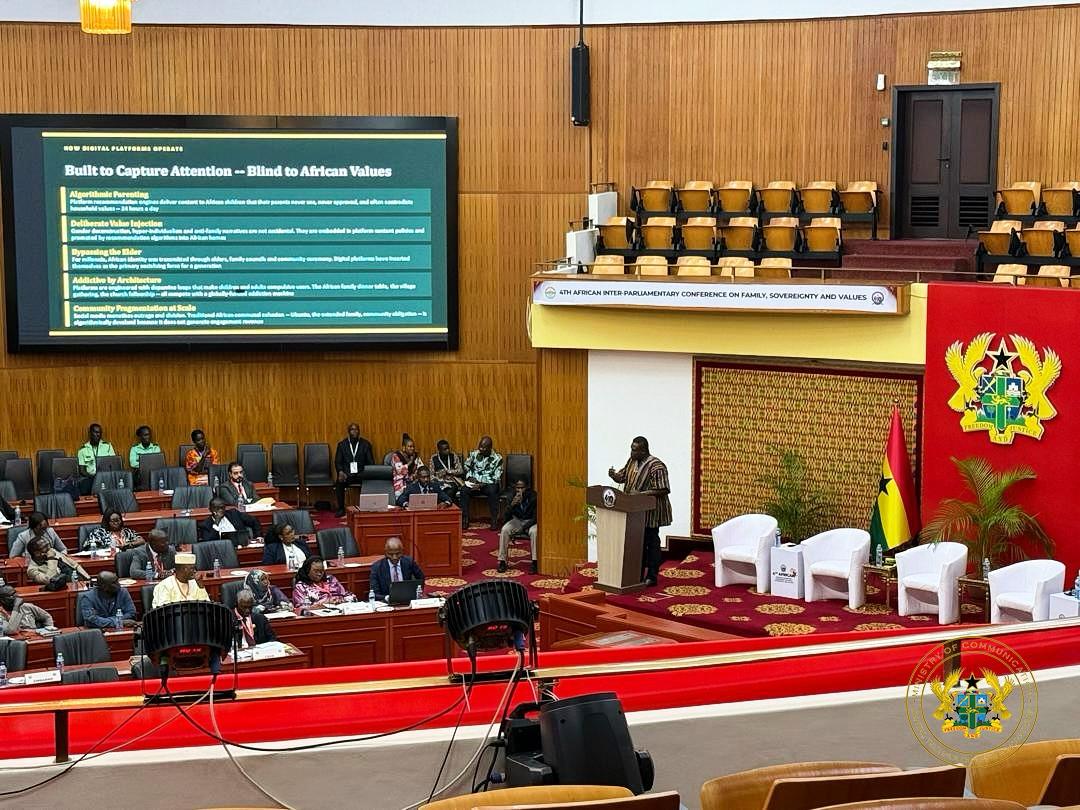
The 4th African Regional Inter-Parliamentary Conference on Family Values and Sovereignty is officially underway in Accra, bringing together lawmakers, faith leaders, and traditional authorities to formulate legislative strategies that protect the traditional nuclear family and uphold national sovereignty.
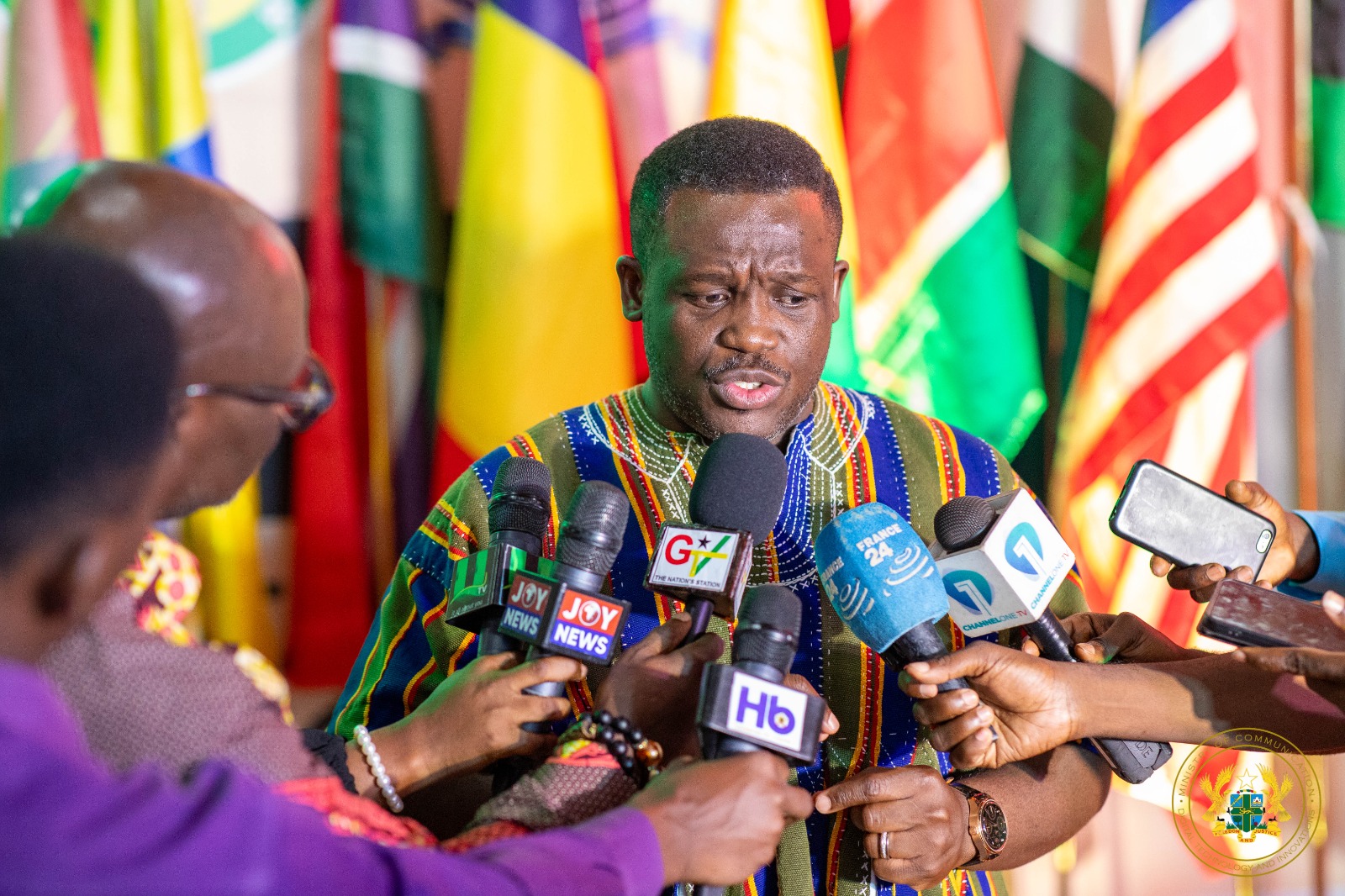
Delivering a powerful, rallying address, Ghana’s Minister for Communication, Digital Technology, and Innovations, Hon. Samuel Nartey George, issued a stark warning to lawmakers; the African family structure is facing an “unprecedented digital assault,” and it is time for parliamentarians to reclaim their legislative authority from Silicon Valley.
The Honourable Minister opened his address by highlighting alarming digital statistics that are actively shifting the cultural landscape for Africa’s youth. With the average screen time for African youth now sitting at a massive 7 hours a day, digital platforms have rapidly replaced traditional spaces of communal and family interaction.
“The average screen time for the African youth is 7 hours… 62% of African youth or teens, actually; so that’s between the age of 13 and 19, are exposed to pornography online even before they turn 15 years.”
The Minister also noted that cyberbullying across sub-Saharan Africa has tripled, which correlates with an increasing number of youth suicides. Furthermore, a staggering 78% of the content consumed by African children originates from foreign platforms, fostering “algorithmic parenting” that completely bypasses parental oversight and elder respect.
“There’s algorithmic parenting. And what that does is the platforms are giving recommendation on a daily basis to deliver content to African children that the parents never see, the parents never approve, and often contradicts what our household values are.”
Rather than just diagnosing the problem, Hon. Samuel Nartey George highlighted how Ghana is proactively fighting back by creating strong national legislative guardrails. Over the years, Ghana has passed and continuously updated key policies, including the Data Protection Act, the Cyber Security Act, and the Online Safety Policy.
Most notably, the Minister emphasized Ghana’s determination to keep its artificial intelligence indigenous. Through the newly introduced National AI Policy, Ghana is mandating that AI deployments respond specifically to local, indigenous needs, rather than importing foreign models wholesale. This includes building a $250 million national AI computer center to develop national language models.
“Today we want to give solutions to our farmers… we’re building national language models… so that when the farmer who is farming cashew… takes that application, he can speak in Bono to the application, and the AI model we have built… will be able to interface… and give him back the response in his mother tongue.”
A core theme of the Minister’s presentation was the critical need for data sovereignty. Currently, *80% of African personalized data is processed outside the continent, which represents an estimated $40 billion extracted from Africa annually with zero percent returning to local economies.
He urged African governments to strictly reject trade agreements that exploit local data under the guise of foreign aid.
“We must refuse trade agreements that compromise African digital sovereignty and data rights… It makes no sense for anybody to be offering you support for agricultural health, and adding sexual and reproductive health rights as part of the terms and conditions… We stand as gatekeepers in parliament to ensure that we protect the African values.”
To secure a digital future that respects African culture, the Honourable Minister presented a five-pillar action plan for every Member of Parliament on the continent to take back to their home countries:
- Pass a Digital Family Protection Act: Establish strict age-appropriate design codes for all platforms serving minors.
- Establish Parliamentary AI & Digital Oversight Committees: Ensure these committees have family protection explicitly in their mandate.
- Ratify the Malabo Convention: Promptly enact good domestic data sovereignty legislation.
- Refuse Compromising Trade Agreements: Resist international treaties that trade away African data rights or digital sovereignty.
- Co-Sponsor an African Inter-Parliamentary Digital Family Protection Declaration: Laying the groundwork for an official African Union values compact.
Concluding his address, Hon. Samuel Nartey George reminded lawmakers that the ultimate responsibility of protecting the innocence and identity of the next generation falls entirely on the shoulders of Africa’s current leaders.
“The children of Africa did not ask to be born into a digital age. They did not choose the algorithms that shape their worldview… That choice belongs to us, the legislators, who are their parents, their grandparents, their uncles, and their aunties… Every lawmaker who stands up to Silicon Valley and says, ‘Not in our homes,’ you will be fulfilling the oldest covenants in African governance.
DigitalSovereignty #AfricaUnite #DataProtection #FamilyValues